Change power cord to the Ultra

Just listen multiple times without knowing which cord is connected and identify which one is connected.
Strictly speaking, this is impossible. The streamer starts up in a couple of dozen seconds, and auditory memory lasts a couple of seconds at most. I checked (but not the power cable, something else), and after two seconds, it's no longer possible to make such a comparison. So, the sound is subjectively identical. And in this case, it's also objectively identical.
 
Last edited:
Remember everyone, the console unit that recorded your music includes miles and miles of tin, it's unlikely to be anything else, or the mixing console would be more valuable than a house.
It still sounds amazing when it comes out, so I think almost everything on the market is overspeccing.
Tin?
 
Remember everyone, the console unit that recorded your music includes miles and miles of tin, it's unlikely to be anything else, or the mixing console would be more valuable than a house.
It still sounds amazing when it comes out, so I think almost everything on the market is overspeccing.
miles and miles?
 
miles and miles?
Think about old school recording consoles, the have wiring looms for multiple channels, that went through many effects boxes, yes I'm sure there's at least a mile of wiring between all the pcbs, wiring and other stuff that the signal goes through when it's recorded,
 
1. Plug in your wiim using all the provided cables that are needed in your system.
2. Say “oh well that’s nice” that wiim gives you everything you need in the box. No need to go cable shopping.
3. Turn on the wiim and any necessary equipment connected to it, depending on your setup.
4. Enjoy the music.

That’s literally all there is to it. Why are we making it more trouble that it is?
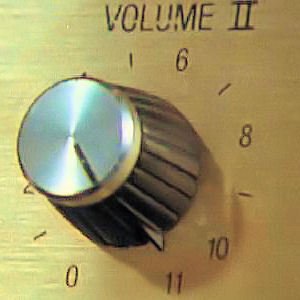
Because this one goes to 11!

1765320507235.jpeg
 
Think about old school recording consoles, the have wiring looms for multiple channels, that went through many effects boxes, yes I'm sure there's at least a mile of wiring between all the pcbs, wiring and other stuff that the signal goes through when it's recorded,
If you count the entire studio, it'll probably be enough. In the mixing console, it'll be maybe two meters per channel. But you're right about the main thing: no one in the studio will bother with cables, especially power cables. They'll just be regular cables.
 
If you count the entire studio, it'll probably be enough. In the mixing console, it'll be maybe two meters per channel. But you're right about the main thing: no one in the studio will bother with cables, especially power cables. They'll just be regular cables.
Surely copper not tin though.
 
Regarding the blind test all you have to do is identify which power cord is connected. Nothing to do with short term memory. Just listen multiple times without knowing which cord is connected and identify which one is connected.
You did not understand the nuance about short term memory and the validity of blind test for critical listening . It cannot properly be done in a pure way and with fast switching and at the same time capture the entirety of sonic differences . It is not practical to be done at home and the results cannot be trusted by third parties.

However in this case the difference is big and blind test can work to capture the difference however not in its entirety that would be appreciated during long term listening .

If I find the chance to do it I will report back , however I believe that you will believe it only if I report a negative result ( which is extremely unlikely ) , so what is the point ?
 
Last edited:
You did not understand the nuance about short term memory and the validity of blind test for critical listening . It cannot properly be done in a pure way and with fast switching and at the same time capture the entirety of sonic differences . It is not practical to be done at home and the results cannot be trusted by third parties.

However in this case the difference is big and blind test can work to capture the difference however not in its entirety that would be appreciated during long term listening .

If I find the chance to do it I will report back , however I believe that you will believe it only if I report a negative result ( which is extremely unlikely ) , so what is the point ?
A statement that I do not necessarily agree with.

Blind tests are by no means free of suggestion for the test subjects, as is generally portrayed.

Personally, I do not find long-term verification to be effective either.

This is countered by the habituation factor of what is heard or listened to for a "longer" period of time.
The best experience was in a situation where it was not known what had been changed in the system.

Regarding the time factor:

It is now easy to record source devices (level corrected) and later, without knowing which recording belongs to which source device, have them operated by an independent person.

Introduction:

Regarding the power cable for Wiim (amp) Ultra...

There are countless measurements of the retroactive effect of SNT on the respective devices in the setup.

A Wiim Ultra will not behave any differently than a similarly designed streamer from other companies.

There are companies whose business is far removed from hi-fi and therefore the niche hi-fi market is basically irrelevant to them.

If "interference suppression" is taken seriously and implemented accordingly, the Wiim Ultra performs superbly as a streamer, far exceeding its consumer status.

Short-term memory...

No musician would be able to recognize a note played incorrectly by another musician after a short pause if they did not have short-term memory.

A/B comparison.

For example, RoomFit.

A correction of 30-20 kHz and without correction.

Within seconds, yes; within 30 minutes, yes; or even later.

If you can't hear the difference, there are two possible reasons:
you should perhaps reconsider your hobby, or RoomFit is not having the effect you expected.

 
Back
Top