The competition doesn't sleep

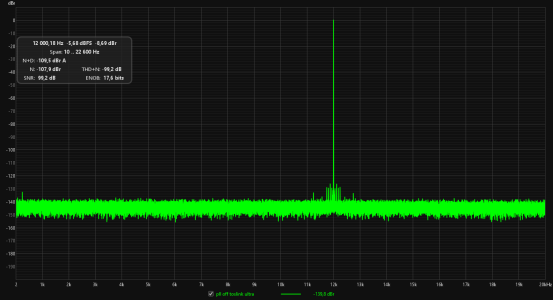
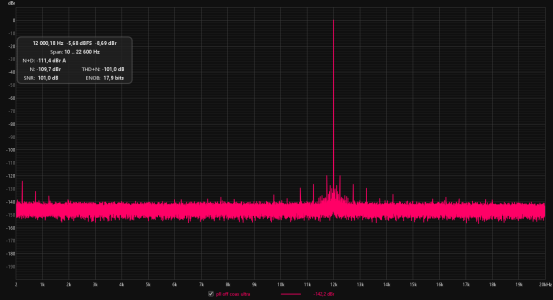
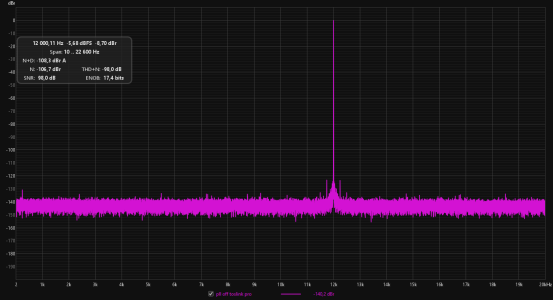
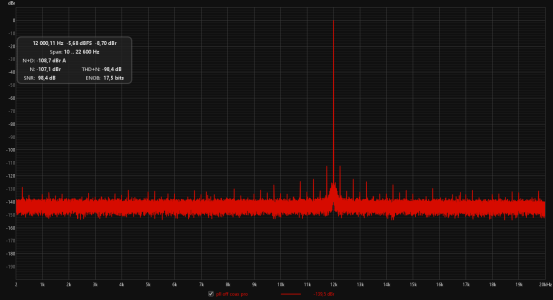
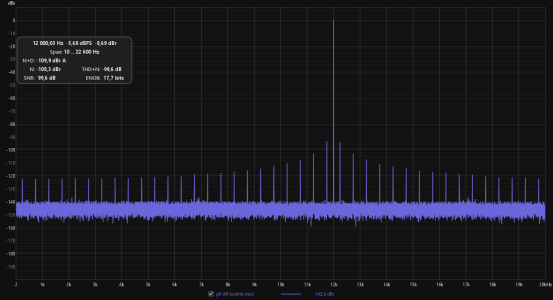
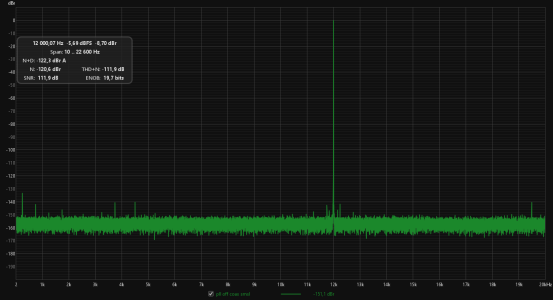
The test here on the digital output has no value...
The blindness here is striking and should raise questions...
 
The test here on the digital output has no value...
The blindness here is striking and should raise questions...
This is an aberration of method and the result is completely skewed...
:cool:
If you notice a problem in the methodology, why not just explain it so that everyone can benefit?

By the way, if the mistake you wanted to point out is the potential sample rate mismatch when using Chromecast in to optical out in the Arylic LP10, that IMHO can't explain the terrible output of the device (edit: I found this perspective relevant).
Especially since the next test (with analog input to optical output) is not much better (and there's no sample rate mismatch in that one).
I.e. it simply doesn't look like a very well performing device overall.
 
Last edited:
A clue... Here, as with similar observations made using an RME card and its steadyclock... So... everything's fine... ;-)
All these observations, made in this way, are completely biased...
are only possible if no input treatments, or very non efficient, are applied.:cool:
Here we only observe the efficiency of the input processing of the 555...which explains why "everything is always fine", and nice signal (the output of the mini is really not great, even inferior to an old Chromecast)
 
Last edited:
I respect you very much...but you're mistaken here, and in a way, being misled is wrong.
Of course I could be mistaken (wouldn't be the first time 🙂) and my intention definitely isn't to mislead anyone, so I'd appreciate it if you could then point out the problem clearly for everyone's benefit.
 
Of course I could be mistaken (wouldn't be the first time 🙂) and my intention definitely isn't to mislead anyone, so I'd appreciate it if you could then point out the problem clearly for everyone's benefit.
I speak three completely unrelated languages and still I cannot make heads or tails of Canard’s brand of English. Unfortunately at this point I’ve simply chosen to hit Ignore on his posts. ¯\_(ツ)_/¯

-Ed
 
But the AP allows for relevant measurements of output jiters...but that's completely unrelated...


(I'm not talking about you, Dominik... that's not my idea, really.. )
but


"Au pays des aveugles, les borgnes sont roi"
 
Last edited:

Here, onlyoneme has taken the necessary precaution if the idea is to present things in this way.
 
But the AP allows for relevant measurements of output jiters...but that's completely unrelated...


(I'm not talking about you, Dominik... that's not my idea, really.. )
but


"Au pays des aveugles, les borgnes sont roi"
Talking about jitter, analyse this then...... 😁

 
I don't mind being taken for a fool... ;-)

But what about you?

Faced with this pseudo-scientific rigor...? It even tinges with demagoguery...
;-)

End for me...
Perhaps your commentary makes more sense in your own language, but I'm afraid it translates as pretentious gobbledegook in English which sort of devalues whatever scientific point you're looking to make.
 
Perhaps your commentary makes more sense in your own language, but I'm afraid it translates as pretentious gobbledegook in English which sort of devalues whatever scientific point you're looking to make.
No pretensions here... especially since the subject is very simple... and logic

but to make things clearer... I pointed to onlyoneme's thread (who had the courtesy to try to understand my gibberish at first...)
Sorry for "my blabla"...

Using the observation method at the DAC output, "which everyone can understand," here at the digital output without precautions, is simply not advisable.....
;-)
Happy new year
;-)
 
(The slight intellectual dishonesty is... Starting from the idea that "the subject of jitter no longer exists," to ""demonstrate"" it in this way...

when the actual observation of the output signal quality of a source on this type of output should be...
no more, and objectively...

A "beautiful bias," as is so often pointed out in others person.... ;-)

)
 
Last edited:
(The slight intellectual dishonesty is... Starting from the idea that "the subject of jitter no longer exists," to ""demonstrate"" it in this way...

when the actual observation of the output signal quality of a source on this type of output should be...
no more, and objectively...

A "beautiful bias," as is so often pointed out in others person.... ;-)

)
It looks like English, it reads like English, but I for one have no idea what it actually means. 🤔🤔🤔🤔🤔
 
It looks like English, it reads like English, but I for one have no idea what it actually means. 🤔🤔🤔🤔🤔
No worries... ;-)

Just so you know, the measurements on the Toslink from ASR *"don't show anything" about the Wiim output... I suggest you read onlyoneme's thread above to understand...
;-)

* yet quick to point out approaches that are not rigorous, not scientific, biais cognitifs etc., "among others persons"
;-)
 
Last edited:
Back
Top