
Tech Tuesday: Multi-Zone Audio Setup Best Practices

JasonWithWiiM

Community Co-Pilot
Staff member
Admin
Joined
Mar 9, 2026
Messages
103

Welcome back to another edition of Tech Tuesday!​

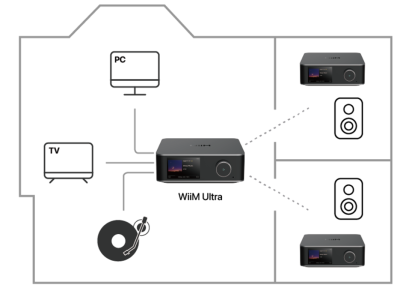
One of the biggest strengths of the WiiM ecosystem is how flexible multi-zone audio can be. You are not locked into a single type of setup or listening style. A WiiM system can be as simple as a couple of grouped rooms playing synchronized music, or as elaborate as a whole-home setup mixing streamers, amps, active speakers, outdoor zones, TV audio, and local media libraries.

Many YouTube videos have captured this idea well by showing how multi-zone systems can seamlessly move between independent listening zones and synchronized whole-home playback.

Today’s post is less about raw networking theory and more about the practical side of building a WiiM multi-zone setup that feels good to actually live with.

For the networking side of things, including synchronization stability and wireless best practices, check out last week’s Tech Tuesday.


Think in Listening Zones​

One thing WiiM does particularly well is flexibility in how you organize playback groups.

Instead of thinking strictly in terms of rooms or individual devices, it often works better to think in listening experiences.

A WiiM group lets you link multiple WiiM devices together for synchronized playback inside the WiiM ecosystem. Persistent groups are saved groups that can be reused more easily, which is especially useful for common situations like “Downstairs,” “Party,” or “Outdoor.”

This is different from platform-level grouping systems such as Alexa MRM or Google Cast speaker groups. Those systems may appear in different apps, behave differently depending on the source, and may not have the same capabilities or limitations as WiiM groups.

So before troubleshooting or planning a setup, it helps to ask: “Am I using a WiiM group, a persistent WiiM group, a Spotify Connect target, an Alexa group, a Google Cast group, or something else?
1778007211764.png

Because WiiM grouping is dynamic, you can change these combinations quickly without rebuilding your setup every time your listening habits change.


The WiiM Home App Is the Heart of the Experience​

The controller experience matters.1778007211774.png


The WiiM Home app becomes the operational center for the entire system. Grouping zones, moving playback between rooms, adjusting volume across multiple devices, switching inputs, or redistributing audio from one source to several zones all happens from one place.

A good multi-zone system should feel effortless to control. If grouping rooms feels cumbersome, people tend to stop using those features entirely.


WiiM's Flexibility Changes How You Can Build a System​

One of the more unique aspects of WiiM compared to some ecosystems is how open the platform can feel.

Some users build systems around WiiM streamers connected to existing stereo gear. Others use WiiM Amps to power passive speakers directly. Some mix older traditional audio systems with newer networked zones. Others combine indoor listening rooms with outdoor audio areas.

Because WiiM supports multiple streaming protocols and input options, many users end up building hybrid systems that evolve over time rather than replacing everything at once.

That flexibility is a major advantage if you already own audio equipment you love.


Different Sources Behave Differently​

Not every source behaves the same way in a WiiM multi-zone setup.

Streaming services, local libraries, HDMI ARC, line-in, Bluetooth, AirPlay, DLNA, Spotify Connect, Roon, Lyrion, Alexa Cast, and Google Cast can each have different expectations around grouping, buffering, and redistribution.

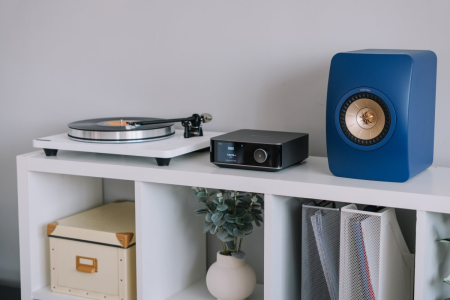
As a practical rule, music-only sources can usually tolerate more buffering because there is no picture to keep in sync. For turntables or line-in music, increasing group delay may improve stability if visual sync is not important.

TV audio is different. With HDMI ARC or optical input from a TV, delay becomes much more noticeable because the sound has to stay aligned with the picture. In that case, the best setting may involve a tradeoff between multi-room stability and lip sync.

It is also worth noting that WiiM Linkplay group playback is currently limited to 16-bit / 48 kHz.

For many whole-home and casual listening setups, that is completely usable. But if your goal is high-resolution playback in every room, this limitation is important to understand before designing your system around grouped playback.

1778007211782.png

If you plan to distribute live audio across multiple WiiM zones, network consistency matters a lot more than many people initially expect.


Good Networking Quietly Powers Everything​

This is where many multi-zone issues actually begin.

As a general best practice, choose a stable and central device as the group leader when possible. If one device is wired by Ethernet and regularly participates in larger groups, that device may be a better starting point than a device on the edge of Wi-Fi coverage.

Also think about the source. If you are distributing line-in, HDMI ARC, Bluetooth, or another physical input, the device receiving that input naturally becomes more important to the group. If you usually start playback from Spotify, Qobuz, TIDAL, a NAS library, or another service, test which device or group target gives you the most predictable behavior.

The best group leader is not always the most obvious room. It is the device that gives you the best mix of stability, source access, and everyday usability.

A synchronized WiiM setup does not just need bandwidth. It needs stable timing and reliable connectivity between devices.

Weak mesh handoffs, inconsistent Wi-Fi coverage, roaming instability, or overloaded wireless environments can all become more noticeable once several devices are trying to stay synchronized together.

That does not mean every WiiM device needs Ethernet, but stable networking becomes increasingly important as systems grow larger and more complex.

Again, if you want to go deeper into this side of things, last week’s Tech Tuesday covers the networking considerations behind stable synchronized playback in much more detail:


Final Thoughts​

One of the best things about a well-built WiiM multi-zone setup is that it eventually fades into the background. Music simply exists where you want it.

You stop thinking about individual devices and start thinking about the experience itself. Music follows you through the house. Different spaces can take on different moods. A gathering can expand from one room into the entire home with a few taps.

That flexibility is part of what makes the WiiM ecosystem so compelling for multi-zone audio.

How have you structured your WiiM setup?

Do you keep fixed groups? Dynamically regroup rooms throughout the day? Mix older stereo equipment into your WiiM ecosystem?
 
I moved my ultra, record player and cassette deck out from under my TV and plugged them all in centrally close to my records, tapes and CDs with a cd player. The ultra doesn't have any speakers attached. It just feeds those devices to a pro plus in my living room, another in the dining room and a Wiim Sound in the kitchen.

I have a persistent group for each and one for all 3. I'm hoping the beta sound profile software evolves so I can use the preset buttons on my remote to switch between them although it works fine as it is (with the app).
 
I moved my ultra, record player and cassette deck out from under my TV and plugged them all in centrally close to my records, tapes and CDs with a cd player. The ultra doesn't have any speakers attached. It just feeds those devices to a pro plus in my living room, another in the dining room and a Wiim Sound in the kitchen.

I have a persistent group for each and one for all 3. I'm hoping the beta sound profile software evolves so I can use the preset buttons on my remote to switch between them although it works fine as it is (with the app).
I do something similar and have been DYING for a move evolved sound profile function.

Managing multiroom is clunky in general (my kingdom for an easier way to de-link a lead device from its followers and have it play standalone) and I think simplifying it moves the needle, particularly for folks who want a whole home system and are less technically inclined
 
This is just me, and no criticism of anyone else's usage or tastes, but I just don't 'get' the need for multiroom for 99% of people in 99% of cases.

'Party Mode'? If we have a party in the house (rare), SWMBO is desperate to keep people in as limited a number of rooms as possible, to avoid external snooping on tidiness. etc.

If I'm in a room, I want to listen to music in that room, not in another room. The number of times I want to listen to music in one room, and someone wants to listen to the same music in another...I have to be honest, I can't think of one. And them needing to need it perfectly time-synchronized to my listening? Really?

As I say, I'm sure there are others who can think of uses, but even then I'm not convinced it'd be particularly a very regular scenario.

So obviously, it's great to have a feature, because you never know when you might want to use it. I suppose what I'm saying is that I don't see the need for the prominence, updates, trumpeting as a fantastic, must-have feature.

But rather than saying "...so you lot are a bit mad" I'll say "I'm clearly missing something". So put me right.

You may unlock usage for me that I'd not thought of.
 
This is just me, and no criticism of anyone else's usage or tastes, but I just don't 'get' the need for multiroom for 99% of people in 99% of cases.

'Party Mode'? If we have a party in the house (rare), SWMBO is desperate to keep people in as limited a number of rooms as possible, to avoid external snooping on tidiness. etc.

If I'm in a room, I want to listen to music in that room, not in another room. The number of times I want to listen to music in one room, and someone wants to listen to the same music in another...I have to be honest, I can't think of one. And them needing to need it perfectly time-synchronized to my listening? Really?

As I say, I'm sure there are others who can think of uses, but even then I'm not convinced it'd be particularly a very regular scenario.

So obviously, it's great to have a feature, because you never know when you might want to use it. I suppose what I'm saying is that I don't see the need for the prominence, updates, trumpeting as a fantastic, must-have feature.

But rather than saying "...so you lot are a bit mad" I'll say "I'm clearly missing something". So put me right.

You may unlock usage for me that I'd not thought of.
It depends on your house layout I guess.

I use multi-room in my Living Room and Kitchen particularly on weekend mornings as I move between the two rooms a fair bit. There is an open plan style layout. This isn't serious listening obviously.
 
It depends on your house layout I guess.

I use multi-room in my Living Room and Kitchen particularly on weekend mornings as I move between the two rooms a fair bit. There is an open plan style layout. This isn't serious listening obviously.
Makes sense if open-plan, but less so in separate rooms.
 
Makes sense if open-plan, but less so in separate rooms.
In the morning I often have two Squeezebox Radios playing the same radio station, one in the bedroom and the other in the bathroom but I don't bother synchronising them. If the bathroom Radio could be persuaded to play automatically after powering it on I would consider it but I don't think it is possible.
 
In the morning I often have two Squeezebox Radios playing the same radio station, one in the bedroom and the other in the bathroom but I don't bother synchronising them. If the bathroom Radio could be persuaded to play automatically after powering it on I would consider it but I don't think it is possible.
I thought there was a setting somewhere (?) in LMS to start up at last stream - maybe in Advanced-Player serrings.
 
This is just me, and no criticism of anyone else's usage or tastes, but I just don't 'get' the need for multiroom for 99% of people in 99% of cases.

'Party Mode'? If we have a party in the house (rare), SWMBO is desperate to keep people in as limited a number of rooms as possible, to avoid external snooping on tidiness. etc.

If I'm in a room, I want to listen to music in that room, not in another room. The number of times I want to listen to music in one room, and someone wants to listen to the same music in another...I have to be honest, I can't think of one. And them needing to need it perfectly time-synchronized to my listening? Really?

As I say, I'm sure there are others who can think of uses, but even then I'm not convinced it'd be particularly a very regular scenario.

So obviously, it's great to have a feature, because you never know when you might want to use it. I suppose what I'm saying is that I don't see the need for the prominence, updates, trumpeting as a fantastic, must-have feature.

But rather than saying "...so you lot are a bit mad" I'll say "I'm clearly missing something". So put me right.

You may unlock usage for me that I'd not thought of.
My family is almost the complete opposite.


My daughter will regularly ask me to sync her room with the living room so she can jam out to whatever I’m playing. She’ll pass through in full teen-grump mode, start bopping her head despite herself, then I’ll see her pull out her phone. A few seconds later, her room joins the group and the music kicks in just as she closes the door.


My wife and I also use “Party Mode” when we’re cleaning the house. It means we can move from room to room without the music constantly dropping away or needing to restart something elsewhere. It turns boring house chores into one continuous soundtrack.


We also entertain outside fairly often, so having the kitchen and outdoor zone grouped is genuinely useful. People drift in and out for food, drinks, or conversation, and the music follows the flow of the gathering instead of being locked to one room.


So for us, multiroom is less about sitting in multiple rooms at once and more about the way people naturally move through a home. It turns the house into one listening space when you want it, and separate zones when you don’t.
 
My family is almost the complete opposite.


My daughter will regularly ask me to sync her room with the living room so she can jam out to whatever I’m playing. She’ll pass through in full teen-grump mode, start bopping her head despite herself, then I’ll see her pull out her phone. A few seconds later, her room joins the group and the music kicks in just as she closes the door.


My wife and I also use “Party Mode” when we’re cleaning the house. It means we can move from room to room without the music constantly dropping away or needing to restart something elsewhere. It turns boring house chores into one continuous soundtrack.


We also entertain outside fairly often, so having the kitchen and outdoor zone grouped is genuinely useful. People drift in and out for food, drinks, or conversation, and the music follows the flow of the gathering instead of being locked to one room.


So for us, multiroom is less about sitting in multiple rooms at once and more about the way people naturally move through a home. It turns the house into one listening space when you want it, and separate zones when you don’t.

Cheers, that's very clear, and I suppose what I expected.

And that's most certainly not something I'd ever use, apart from extremely rarely.

Just goes to show, we're not all the same, and it's great that everyone is catered for.

However, my initial point remains. Whilst your usage is very helpful for you, and more than valid, I'd be surprised if it were common, and it's the constant emphasis as a major feature which has me scratching my head.
 
I'd say it's very common in the Alexa world as well. I've been admin of a uk Alexa user group for more years than I care to remember and would say its MRM (multi room music) is a regular topic.
 
Multi Room audio is probably the best thing about the WiiM ecosystem in my opinion, and it’s something I use everyday, to stream music in different rooms, hallway, and upstairs landing, and I regularly add, and remove listening devices from my current listening group as and when I see the need.

For this reason, I don’t use persistent groups, as I would need that many of them.
 
Cheers, that's very clear, and I suppose what I expected.

And that's most certainly not something I'd ever use, apart from extremely rarely.

Just goes to show, we're not all the same, and it's great that everyone is catered for.

However, my initial point remains. Whilst your usage is very helpful for you, and more than valid, I'd be surprised if it were common, and it's the constant emphasis as a major feature which has me scratching my head.
It was also a major feature for Sonos and Squeezebox 15-20 years ago probably with the aim of encouraging you to buy more devices 😂
 
I'd be surprised if it were common, and it's the constant emphasis as a major feature which has me scratching my head.
On the contrary, I’d like to ask you: Which feature do you think is the most common and deserves the most emphasis?

Let’s look at this from a different perspective.

When I first saw the Mini catalog, I felt a strong sense of incongruity. That’s because “AirPlay 2” was listed right after the product name. As an Android user, I have no experience with AirPlay. However, I can understand why Linkplay placed this keyword front and center: there’s a demand for it.

Let’s get to the main point.

This is the product name for the Mini on Amazon.

"WiiM Mini AirPlay 2 Wireless Audio Streamer, Multiroom Stereo, Preamplifier, Works with Alexa and Siri Voice Assistants, Stream Hi-Res Audio from Amazon Music, Tidal and More"


And this is the product name for the Ultra.

"WiiM Ultra Music Streamer & Digital Preamp | 3.5" Touchscreen, Compatible with Google Cast & Alexa, Stream Spotify, Amazon Music, Tidal & More | HDMI ARC, Phono Input & Headphone Output | Space Gray"


The product name for the Amp Ultra.

"WiiM Amp Ultra with Voice Remote 2 | 100W Streaming Amplifier with Premium ESS ES9039Q2M DAC & Dual TI TPA3255 Amps | Built-in RoomFit EQ & Touchscreen | HDMI ARC, Optical, RCA Inputs | Space Gray"


Starting with the Mini and up through the Amp Pro, the product names included the word "Multiroom," but that has been dropped in the Ultra series. Furthermore, its prominence in the product descriptions has been significantly reduced. In other words, they are carefully selecting which features to highlight depending on the model.


In my opinion, Multiroom is by no means the feature that is "constantly emphasized as a major feature."

However, even if it isn’t widely used, that doesn’t change the fact that it’s an important feature for the WiiM ecosystem. And there are plenty of other features like that. Some people use presets every day, while others never use them at all. Some people rave about RoomFit, while others say they don’t need it at all.

So what? 🙂
 
In my opinion, Multiroom is by no means the feature that is "constantly emphasized as a major feature."

I'd offer that the existence of this thread suggests otherwise. 🤷‍♂️

Very interesting to hear of people who do use this feature. We do occasionally have people over for a barbecue, involving people shuffling between the salmonella burgers outside and the luke-warm lager in the kitchen. Could see some use there.

I feel another fred coming on...
 
I'd offer that the existence of this thread suggests otherwise. 🤷‍♂️
Did you know that Tech Tuesday covers a variety of other features as well?

And I think the reason they provide technical explanations isn’t so much because multi-room is a common feature, but because it’s prone to issues.

So, don't you answer my question? 😂
 
Did you know that Tech Tuesday covers a variety of other features as well?

And I think the reason they provide technical explanations isn’t so much because multi-room is a common feature, but because it’s prone to issues.

So, don't you answer my question? 😂

Yes, I'm aware it covers other features.

If this thread is only here due to multi-room being prone to issues, but wasn't commonly used, I suspect the issues would be just ignored.

No, I didn't answer your question.

Not sure where you're going with this.

The whole point of my post was simply that I was surprised that multi-room was as popular as its attention (in threads like this) suggests, and I couldn't see more than a fairly limited use for it.

Others have constructively contributed explaining how they've found it useful, which is great.
 
Back
Top