

Hi,
I’d like to propose adding a harmonic saturation / analog-style processing module to the WiiM app (in addition to the existing PEQ).
Something like here:
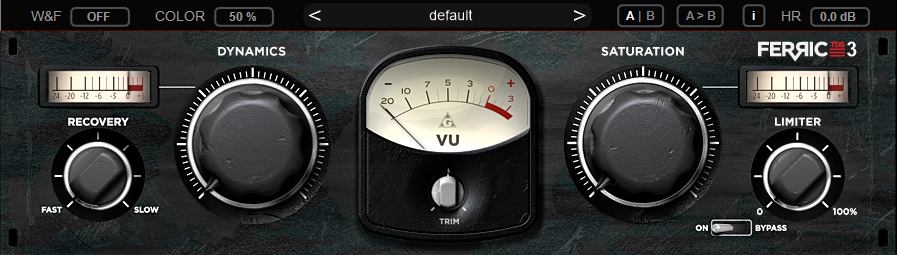
 varietyofsound.wordpress.com
I took the liberty of using AI to help prepare the text below, since I wouldn’t have been able to describe it this precisely myself. If the AI came up with any nonsense, feel free to comment on that.
"Parametric EQ (PEQ) is a linear process:
In contrast, saturation / analog-style processing is non-linear, which means it fundamentally changes the signal in ways PEQ cannot replicate.
 PEQ cannot generate new frequencies — only adjust existing ones
PEQ is static and does not react to signal dynamics
PEQ does not affect dynamics at all
PEQ has no temporal behavior — it is instantaneous and static
PEQ does not create any interaction between frequencies
PEQ does not change waveform shape
PEQ often requires reducing highs, which can lead to dull sound instead"
I find many tracks more enjoyable with this plugin than without it. I understand that it moves us away from how the music was originally recorded, but honestly, who really listens in a perfectly reference way anyway? Different speakers have their own coloration, amplifiers (especially tube ones) add their own character, and even room acoustics change the sound significantly. In practice, almost nobody hears a track exactly as it was created in the studio.
What this kind of feature does is simply give listeners an option... a way to make the sound more enjoyable for their own taste. And that’s the key point: it doesn’t have to be forced on anyone. It can be implemented gradually.
I’d like to propose adding a harmonic saturation / analog-style processing module to the WiiM app (in addition to the existing PEQ).
Something like here:
FerricTDS mkIII released
FerricTDS mkIII – Tape Dynamics Simulator At a Glance FerricTDS was designed to capture the unmistakable warm yet powerful sound of classic tape compression in all its facets and detail, and …
varietyofsound.wordpress.com
I took the liberty of using AI to help prepare the text below, since I wouldn’t have been able to describe it this precisely myself. If the AI came up with any nonsense, feel free to comment on that.
"Parametric EQ (PEQ) is a linear process:
- it can only boost or cut frequencies that already exist in the signal
- it does not create any new spectral content
In contrast, saturation / analog-style processing is non-linear, which means it fundamentally changes the signal in ways PEQ cannot replicate.
What saturation does (that PEQ cannot)
1. Generates new harmonic content
- Adds harmonics (2nd, 3rd, etc.) based on the input signal
- These harmonics are musically related (octaves, fifths), often perceived as “warmth” or “fullness”
PEQ cannot generate new frequencies — only adjust existing ones2. Level-dependent behavior (dynamic response)
- The effect increases with signal level (louder = more saturation)
- Quiet passages remain clean, louder ones become richer
PEQ is static and does not react to signal dynamics3. Soft compression / natural limiting
- Saturation gently compresses peaks (soft clipping)
- Increases perceived loudness without harsh limiting
PEQ does not affect dynamics at all4. Time-dependent behavior (“memory effect”)
- Analog-style processing (e.g. tape) reacts with a slight delay and smoothing
- This creates a more natural, less “rigid” sound
PEQ has no temporal behavior — it is instantaneous and static5. Intermodulation products (controlled)
- Non-linear processing creates additional interactions between frequencies
- This increases perceived density and “body”
PEQ does not create any interaction between frequencies6. Transient shaping via waveform transformation
- Softens sharp transients (reduces harshness)
- Alters waveform shape (not just amplitude)
PEQ does not change waveform shape7. Psychoacoustic benefits
- Increased perceived:
- warmth
- presence
- density
- Often reduces the perception of “digital harshness” without needing treble cuts
PEQ often requires reducing highs, which can lead to dull sound instead"I find many tracks more enjoyable with this plugin than without it. I understand that it moves us away from how the music was originally recorded, but honestly, who really listens in a perfectly reference way anyway? Different speakers have their own coloration, amplifiers (especially tube ones) add their own character, and even room acoustics change the sound significantly. In practice, almost nobody hears a track exactly as it was created in the studio.
What this kind of feature does is simply give listeners an option... a way to make the sound more enjoyable for their own taste. And that’s the key point: it doesn’t have to be forced on anyone. It can be implemented gradually.
Last edited:
Upvote
0


