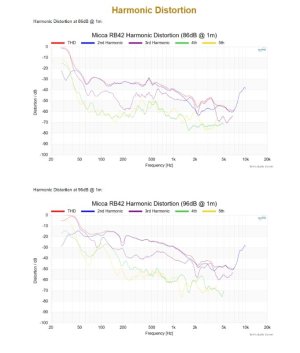
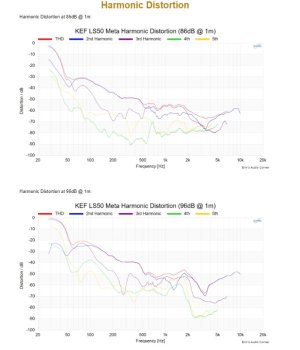
Harmonic distortion means that multiples in frequency of the input signal are added. Room correction in general doesn't really care about harmonic distortion. Forget these measurements.
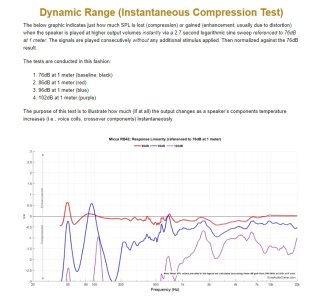
On the other hand there is linear distortion, which means deviation from the ideal linear transfer function. Unfortunately, this does also depend on the level, as indicated by the instantaneous compression test. The above graph depicts a pretty good example of a pretty bad speaker, which deviates from a linear response by more than 3 dB at just 96 dB sound pressure level.
Room correction can correct for some deviation from a smooth frequency response, but it cannot correct for compression (when the deviation from the ideal depends on the sound pressure level). There's no point in going louder than your typical listening levels, at least if you stick to the swept sine measuring signal. The Moving Microphone Measurement will benefit from some extra level. But if your speakers do show a noticeable compression effect at such an elevated level, the only way up is better speakers.