Another room fit,correction question (what volume)

gasolin75

Active member
Joined
Apr 27, 2024
Messages
101
Another room fit,correction question

At what volume should you do room fit,correction ?

At low levels the bass might not be to loud,noticeable and at high level the frequency responce can change alot with a brighter sound or more boomy bass or sharpness in the midrange
 
Another room fit,correction question

At what volume should you do room fit,correction ?

At low levels the bass might not be to loud,noticeable and at high level the frequency responce can change alot with a brighter sound or more boomy bass or sharpness in the midrange
Loud enough to be well above ambient noise but not loud enough to deafen you. The microphone doesn't see any difference in frequency response even if your ears and brain think there is one.
 
General recommendations is 75-85 dB. That is a little above normal listening volume.

It do however depend on how linear the speakers frequency response is for different volumes.

I would start out with the listening volume you use most.
 
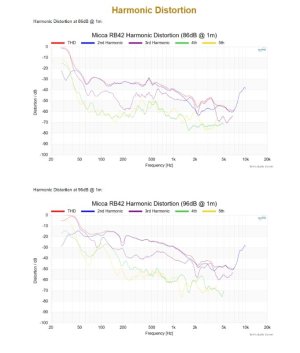
distortion does change as you play loud, if it effects the measurements i don't know, i just think you get a different result when playing low level asyou might do sometimes at night listening to jazz or loud if you play a live rock album or classic music ans want a high dynamic range

2025-12-26 12_16_48-Greenshot.jpg
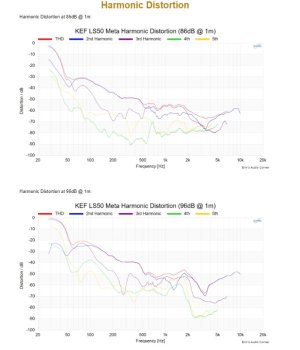
Well it's a cheap speaker but more expensive speakers also does it at high levels

2025-12-26 12_20_51-Greenshot.jpg
 
let me say it in another way

Does doom fit,correction adjust the sound differently depending om what level,volume you use ?
 
Last edited:
let me say it in another way

Does doom fit,correction adjust the sound differently depending om what level,volume you use ?
I would think only at levels close to the speaker's limit. I measured the response at different volume levels and the only difference was the change in level. The shape of the response was the same. Like others said just measure at the levels you listen at. Try one measurement at high and one at low to see how close they are.
 
Harmonic distortion means that multiples in frequency of the input signal are added. Room correction in general doesn't really care about harmonic distortion. Forget these measurements.

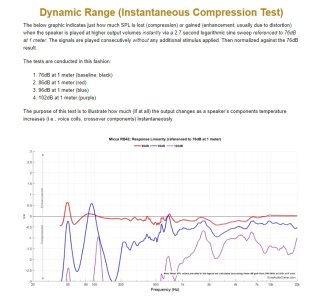
On the other hand there is linear distortion, which means deviation from the ideal linear transfer function. Unfortunately, this does also depend on the level, as indicated by the instantaneous compression test. The above graph depicts a pretty good example of a pretty bad speaker, which deviates from a linear response by more than 3 dB at just 96 dB sound pressure level.

Room correction can correct for some deviation from a smooth frequency response, but it cannot correct for compression (when the deviation from the ideal depends on the sound pressure level). There's no point in going louder than your typical listening levels, at least if you stick to the swept sine measuring signal. The Moving Microphone Measurement will benefit from some extra level. But if your speakers do show a noticeable compression effect at such an elevated level, the only way up is better speakers.

 
Back
Top