Feet for wiim improves sound

when you say "floating"... sounds like maybe a suspension system of some sort?? can you share more about your setup?
Yes, this is diy model.
when you say "floating"... sounds like maybe a suspension system of some sort?? can you share more about your setup?
Yes, where previously had everything on the Grand Prix Monaco stand, everything was impacting and strangely even mid-fi solid state gear like a 200 watt Rotel amplifier.

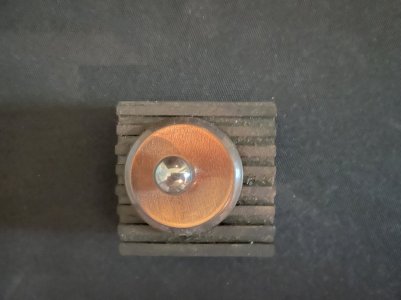
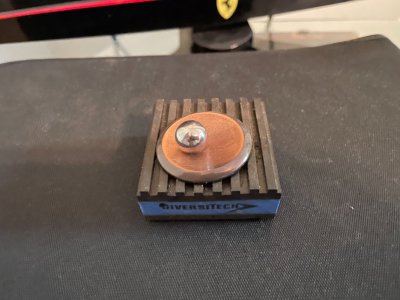
Here, it was a diy effort. The WiiM Pro is a very lightweight device. Didn't expect any impact so was surprised there was. Applied the ball bearing floating concept. Drilled into the blue/black rubber type base and inserted the curved brass pieces. (Got those off Etsy I believe.) Then the ole 1/2" hard stainless steel ball.

Insert under any device using three of them in a triangle formation. Give a push and watch the short float movement. You're good to test!
IMG_1205 2.jpg
 

Attachments

  • IMG_1204.jpg
    IMG_1204.jpg
    128.2 KB · Views: 27
i think you missed my point, i'm not trying to argue... what you described in your post was aerospace level stuff - that's what i was getting at.

i don't think you need that level of damping in a consumer product to combat PCB microphonics that it might suffer from in-room vibrations. but i do think that we need more than what is commonly implemented in the popular products. hence the suggestion for these kind of vibration damping/resonance control tweaks...

and it's not the freezer, but the oven! many higher end audio manufacturers use OCXO oven-controlled implementations.... :)

plus i understand that many people on here don't think that upgrading power supply, or improving damping etc can be of any benefit. but there are some who do. and that's fine with me.
(y)
No doubt it all improves.
But the cost to get minor degrees of better-ness can be steep for the more expensive brands. I get as close as I can afford then use affordable (and proven) things to get a bit closer. (The thinking and reality is, the cheaper stuff often is good electronics but in cheaper form factors. That is what gets you the good price but, hopefully, decent sound and good soldering.)
In that sense, dampening gels under speakers and components, might do the trick for thousands less and hundreds or tens less if one avoids overpriced audiophile contraptions, DIY hacks involving ball bearings, bananas, or cats, or; those ubiquitously mentioned black rubber dome feet that are extremely ugly.
 
In keeping with the "violins are made of spruce and maple, so my speakers will sound more realistic if they, too, and made from spruce and maple" mentality, I use these things, made for damping drums and cymbals, under speakers and all sort of other things around the house. Everything sounds great! They don't lift things much, so won't be good for ventilation. But if they're good enough for drums, they must be good enough for a stereo system, amiright? They're very good at preventing objects from sliding around.
 
In keeping with the "violins are made of spruce and maple, so my speakers will sound more realistic if they, too, and made from spruce and maple" mentality, I use these things, made for damping drums and cymbals, under speakers and all sort of other things around the house. Everything sounds great! They don't lift things much, so won't be good for ventilation. But if they're good enough for drums, they must be good enough for a stereo system, amiright? They're very good at preventing objects from sliding around.
By lucky chance they are also very good for stylus cleaning. :D What's not to like? ;)
 
Even better, they are Transparent so won't colour the sound.
And you can also get the blue ones ... if you're in a depressed mode 'cause your baby left you' and you want to make sure that this mood continues ...
 
Last edited:
In keeping with the "violins are made of spruce and maple, so my speakers will sound more realistic if they, too, and made from spruce and maple" mentality, I use these things, made for damping drums and cymbals, under speakers and all sort of other things around the house. Everything sounds great! They don't lift things much, so won't be good for ventilation. But if they're good enough for drums, they must be good enough for a stereo system, amiright? They're very good at preventing objects from sliding around.
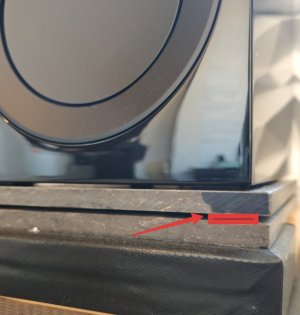
I use these gel pads in many places in my house. They are mainly for earthquake protection, but I also place them under speakers. However, if I place them directly under the speaker, the vibrations from the woofer could cause the cabinet to shake. So, I stack two stone slabs as a base, like this, and sandwich a gel pad between them.🙂

1620.jpg


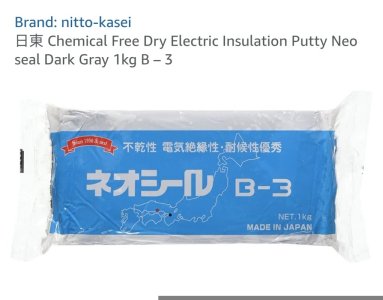
Gel pads have the property of dissipating vibrations (seismic isolation), so strictly speaking they are not vibration-damping pads. I use this silicone putty as a vibration-damping material. It is a non-hardening putty that can vibration damping, electrical insulation, and waterproof.
1618.jpg

This putty provides excellent vibration damping when applied to the inside of my cheap speaker cabinets or subwoofers. I also use it on the hood of my cheap car. It makes the door slam like a luxury car.😄

However, once applied, it is difficult to remove cleanly, so I don't recommend applying it to the exterior.
 
Gel pads have the property of dissipating vibrations (seismic isolation), so strictly speaking they are not vibration-damping pads. I use this silicone putty as a vibration-damping material. It is a non-hardening putty that can vibration damping, electrical insulation, and waterproof.
View attachment 31029
This is called plumbers putty in USA. Often a better alternative to canned expanding foam around pipes exiting/entering the home.
 
This is called plumbers putty in USA. Often a better alternative to canned expanding foam around pipes exiting/entering the home.
Yes, that's correct.🙂
Neo Seal B-3 can be considered its high-quality version.


What's the difference between vibration damping and vibration dissipating?

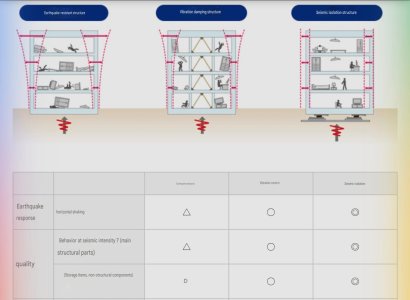
Damping putty suppresses the vibration of materials. Seismic isolation (dissipating) gel pads make it difficult for vibrations to transmit to other materials.

This diagram shows how each component functions during an earthquake.

637.jpg
 
Back
Top