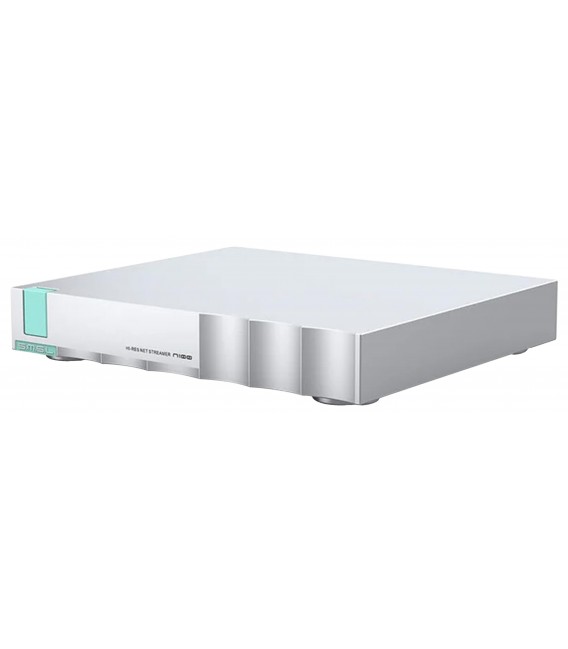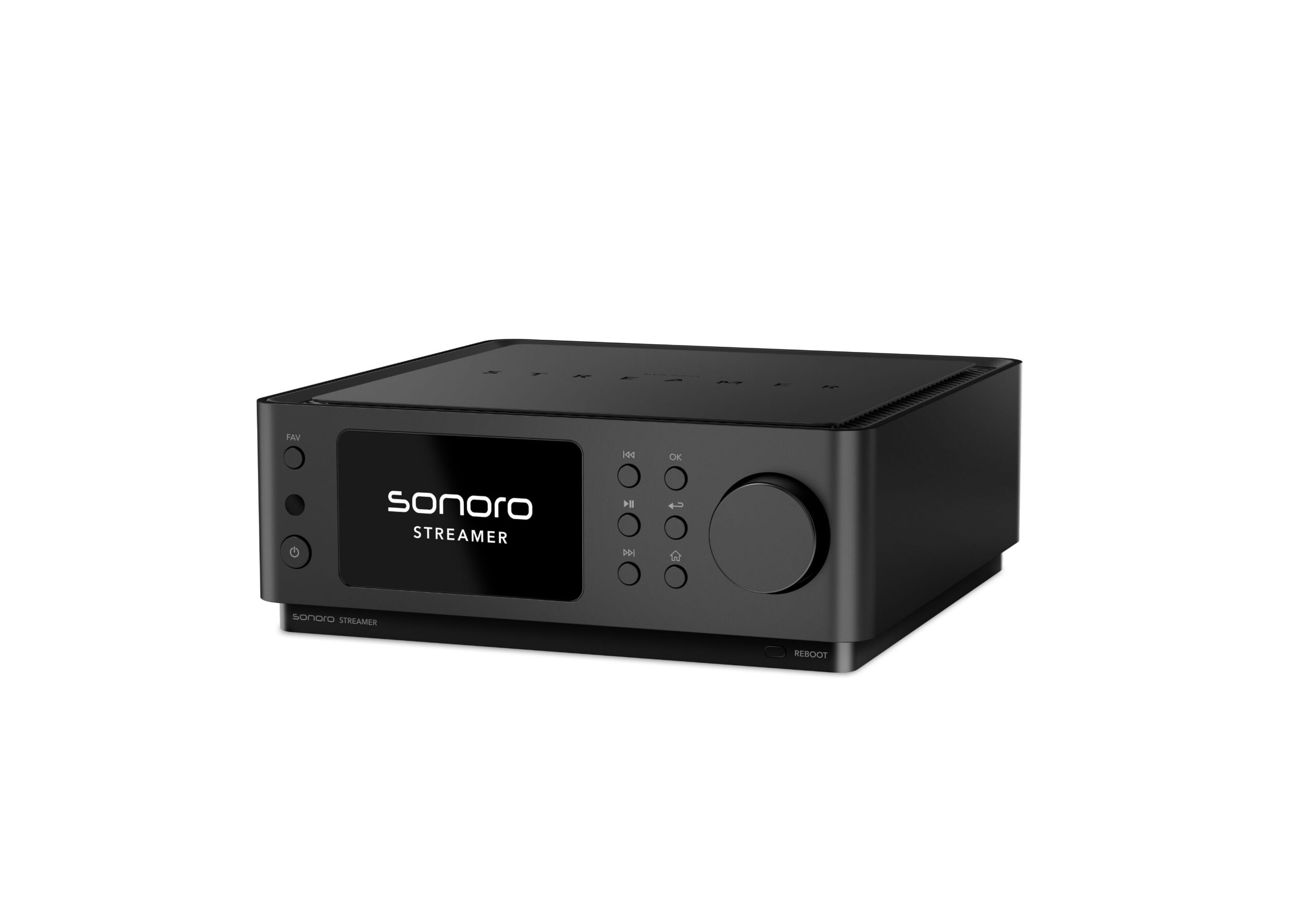
The competition doesn't sleep

Damn, I really hate being constantly quoted in the context of Canard's comments ;) But to the point, his point is that tests like Amir's don't say anything about the actual quality of a digital audio output. And it's hard to disagree; suffice it to say that, according to this methodology, almost every digital audio output in today's equipment will be perfect.
 
I'm reading @onlyoneme's results correctly, WiiM Mini digital output seems to have less than 1ns of jitter, which is much less than what jitter audibility studies I've seen suggest is audible.
No, it's not a jitter measurement. It's just a way to show that the quality of digital outputs differ, even if some people say that it's 'perfect' based on the rather irrelevant results of some tests.
 
Damn, I really hate being constantly quoted in the context of Canard's comments ;) But to the point, his point is that tests like Amir's don't say anything about the actual quality of a digital audio output. And it's hard to disagree; suffice it to say that, according to this methodology, almost every digital audio output in today's equipment will be perfect.
Yes but why is it hard to disagree or agree? Most people here can't make heads or tails from Canard's comments so what is the correct way to measure actual quality and precisely why do tests like Amir's do not say anything? You seem to understand what the problem/point is so please explain...
 
Yes but why is it hard to disagree or agree? Most people here can't make heads or tails from Canard's comments so what is the correct way to measure actual quality and precisely why do tests like Amir's do not say anything? You seem to understand what the problem/point is so please explain...
Post in thread 'The competition doesn't sleep' https://forum.wiimhome.com/threads/the-competition-doesnt-sleep.4479/post-166363


seems understandable here
But rest assured, I will no longer participate in this kind of discussion.
;-)
 
Last edited:
Yes but why is it hard to disagree or agree? Most people here can't make heads or tails from Canard's comments so what is the correct way to measure actual quality and precisely why do tests like Amir's do not say anything? You seem to understand what the problem/point is so please explain...
It should rather focus on the jitter over frequency, electric noise in case of coaxial or eye pattern analysis. Instead we got a test which checks if there is some sort of the audio processing involved which affects the stream.
 
No, it's not a jitter measurement. It's just a way to show that the quality of digital outputs differ, even if some people say that it's 'perfect' based on the rather irrelevant results of some tests.
Thanks for the correction. Perhaps I should add that I don't disagree with the basic premise that quality of digital outputs differ more than some tests might imply. And if a difference in quality of digital outputs exists, I also agree that it makes sense to measure this in a meaningful way as part of a full technical analysis of the device.

Though I have to say I'm sceptical of the practical/audible significance of this. But that's probably a different topic, and in any case it doesn't make this discussion any less interesting.

Instead we got a test which checks if there is some sort of the audio processing involved which affects the stream.
This (long) discussion started from a post where a device was mentioned which really had a poor result in Amir's digital output test (link), and it was me who compared that one to a WiiM Mini, which had a much better result in the same kind of test (link). This example illustrates why in my opinion this kind of test can still be informative in certain cases - even if it doesn't tell the whole story.

Unfortunately I did use the word 'perfect' to describe WiiM Mini digital output, which is I guess what triggered this discussion.
 
At least it seems unlikely that a device delivering bad performance with PLL on the receiving side would outperform a device with good results in the same test. Having said that, a single number value and even a single graph will never be able to capture all aspects of performance, even less its relevance as far as perception goes.
 
Last edited:
Wiim, in the future, on its next machines, will certainly be able to improve the buffering of its digital outputs and implement galvanic isolation for the coaxial output (perhaps even on the USB?)....
"Doing better"... a normal evolution...
(It has improved with their different models)


(The Mini is particularly lacking in this area ( less that s a old chromecast audio of 2014!)... but it was their first machine... modest etc... so nothing shocking in my eyes... I'll just pay more attention to the "DAC downstream", with a "serious" input process..)


Not "technical"... I hope this will be understandable enough...:cool:
 
Last edited:
Back
Top