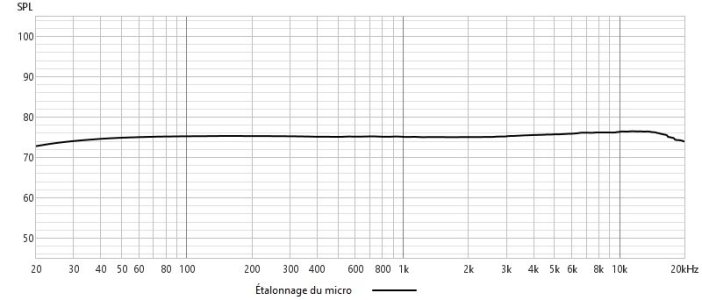
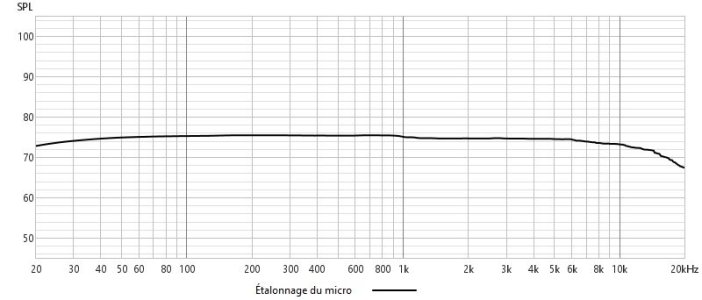
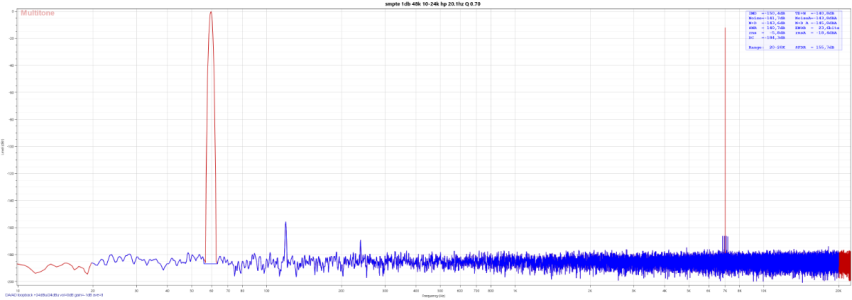
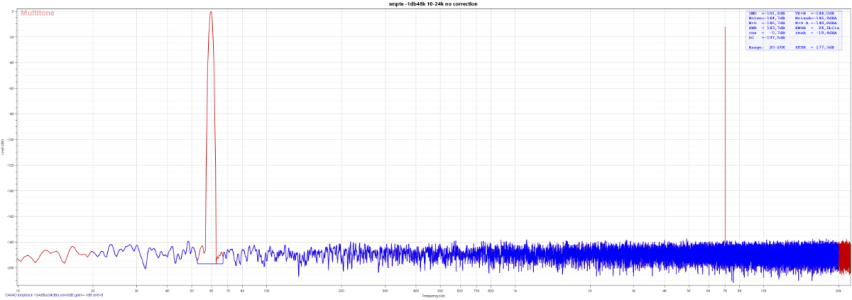
a dayton "cross spectrum" calibration ( your ""6khz"" down), no ?? ;-)
examples to illustrate, a little, the classic situation:
cal "cross" ( in rew ) ;-)
(end of cross spectrum, for those uses, general public, it was a really great offer, what a shame. :-( )
,
(on Earthworks , which normally does not provide 90-degree calibration, the drop is less pronounced but starts lower)
(The Umiks and the little Dayton USB remain great bargains suited to these uses... just be aware of their limitations depending on how you use them... ;-) )
Not sure I understand what you were meaning to say, but the reason for the difference in measured in-room response above 6kHz we're discussing now is not principally due to microphone calibration file, it is due to microphone orientation and the way reflections are registered by the microphone (which are not really 100% omnidirectional at all frequencies).
I've explained the effect previously here.
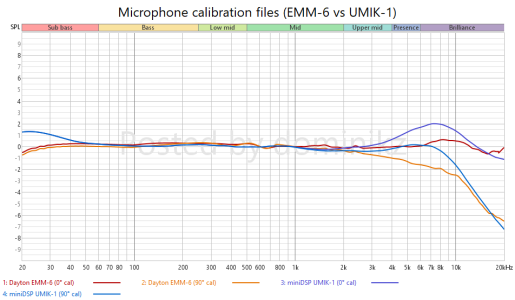
By the way, I own two measurement microphones: a Cross-Spectrum Labs calibrated Dayton Audio EMM-6, and factory-calibrated miniDSP UMIK-1.
Their calibration files look pretty different:

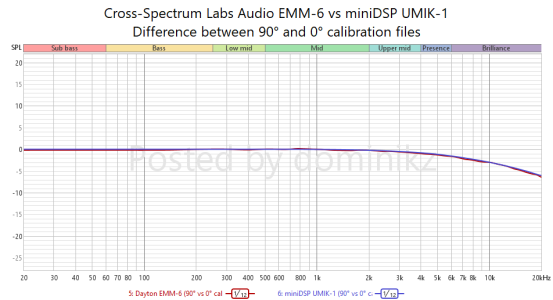
But if we normalize the 90° cal file to the 0° cal file we can see the difference between the two cal files is actually identical for both mics:

This is not surprising given that the physical design of both mics is very similar, so their directional characteristic must be similar as well.
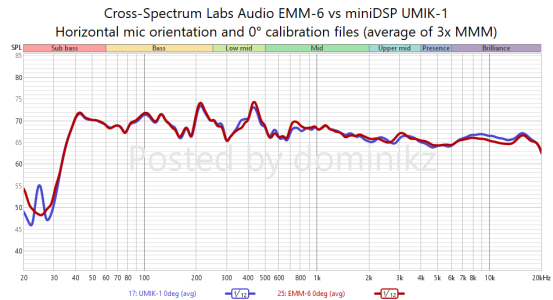
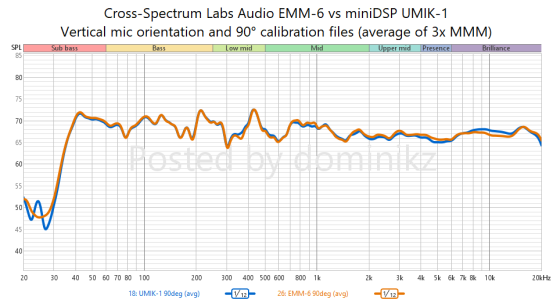
As a result, in-room measurements taken with either microphone look almost identical under the same conditions:
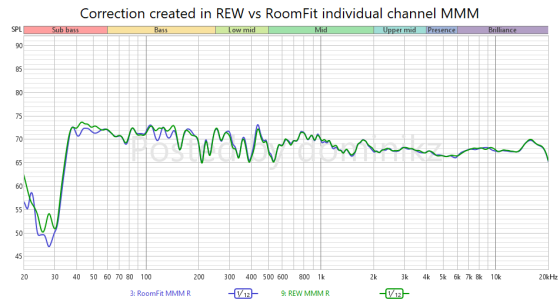
We should note that there are of course some take-to-take variations, especially since MMM is susceptible to environment noise (whereas sweep measurement is much less sensitive to noise - but more sensitive to placement).
So as I mentioned before, microphone orientation is not that important - it is however important to use the appropriate calibration file for the chosen microphone orientation:
- Use 0° calibration file if you point the microphone to the speakers (i.e. horizontal), and
- Use 90° calibration file if you point the microphone to the ceiling (i.e. vertical)
For any pencil-shaped omnidirectional measurement microphone the measurement with vertical orientation and 90° calibration file will have about 1-2dB more level above about 6kHz, compared to a measurement with horizontal orientation and 0° calibration file due to the effects
I've explained previously here, with examples provided
here and
here.
Of the two, vertical mic orientation (with 90° calibration file loaded) gives slightly more accurate results at the highest frequencies (compared to anechoic PIR), so if pressed that's what I'd recommend to use.
Hope this is helpful!