
It would sure be nice if the roomfit profiles could be assigned to presets on the remote control of the Wiim Amp Pro, Pro Plus, and Ultra. My listening room is very asymmetric. Sometimes I listen with the curtains open, so a lot of sound reflections off the large windows on one side of the room, and sometimes I listen with the heavy velvet curtains closed which greatly reduces sound reflections.

You are using an out of date browser. It may not display this or other websites correctly.
You should upgrade or use an alternative browser.
You should upgrade or use an alternative browser.
Wiim Ultra with SVS Micro 3000
- Thread starter Lagavulin
- Start date
-
- Tags
- subwoofer wiim ultra

Lagavulin
Active Member
- Joined
- Aug 10, 2025
- Messages
- 66
The integration between the baby harbeth's and the sub is if anything even better than with the Tannoys ...
They are maybe a foot or so in front of the Tannoys position which has got me thinking about what was said earlier on trying to improve the sync by adjusting the Ultras auto sync of the mains and subs manually by a ms or two.
I think I will attempt just that next week and see where I get with it
They are maybe a foot or so in front of the Tannoys position which has got me thinking about what was said earlier on trying to improve the sync by adjusting the Ultras auto sync of the mains and subs manually by a ms or two.
I think I will attempt just that next week and see where I get with it
Lagavulin
Active Member
- Joined
- Aug 10, 2025
- Messages
- 66
Having failed miserably to resist my urge to buy a second SVS 3000 Micro it got delivered yesterday.
I have connected the two subs to the WiiM Ultra via a y splitter cable.
I haven't had much chance to play around with settings or positioning or anything really as yet. I made sure the settings on the two subs were the same at -20dB volume level and everything left to the Ultra to control.
I was expecting an increase in bass output on the first track I played but it wasn't there ... it may have been an unreasonable expectation with everything left unchanged on the Ultra.
With very limited listening time it did sound different ... somewhat smoother if that makes sense and less localised even though the subs are only about apart.
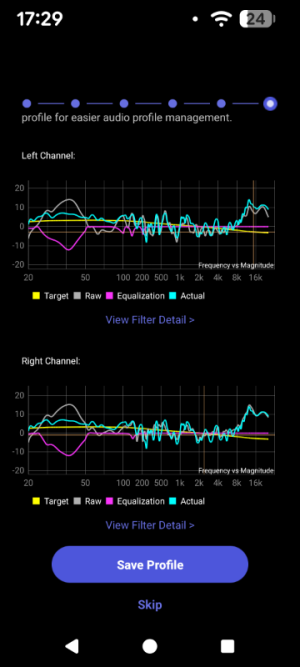
As a last thing to do before I finished for the night was to run a new RoomFit evaluation.
I didn't change anything from what I was running earlier ... that is crossover at 80Hz, phase 180°, Bypass Mode and Output Bass both off. I didn't have time to run a new subwoofer sync so the latency stays the same.
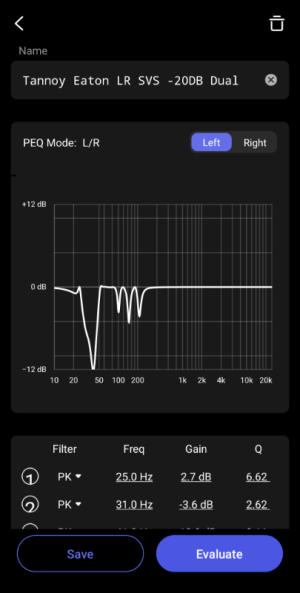
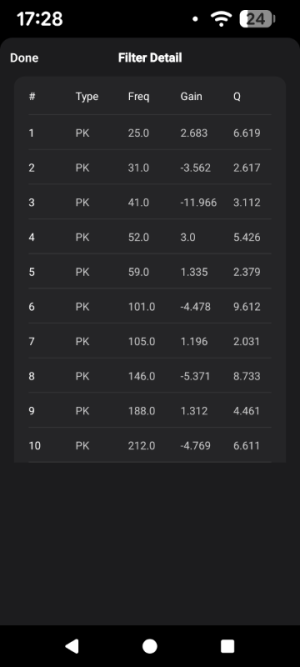
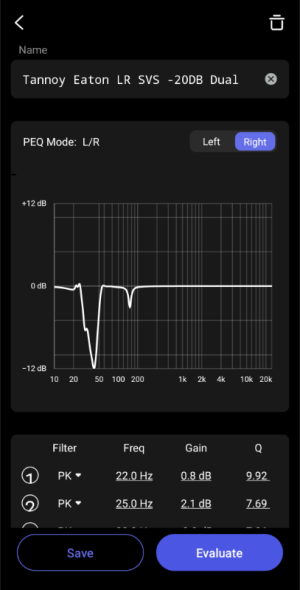
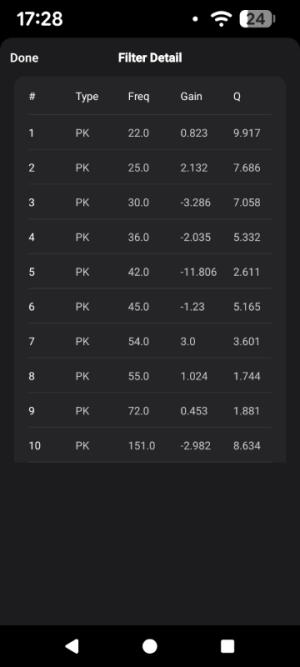
My room has a bass hump around 50Hz and that's still there with the room evaluation and most of the PEQ bands are still used to correct it but not a problem. Here are my results ... next is to have an extended listen when I get the chance
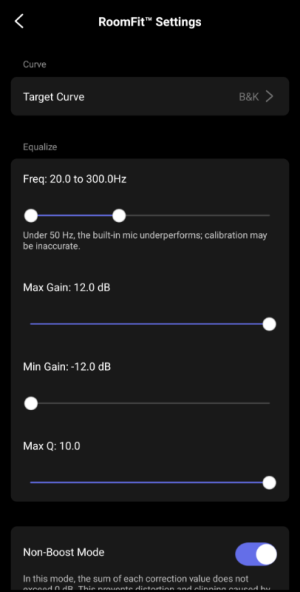
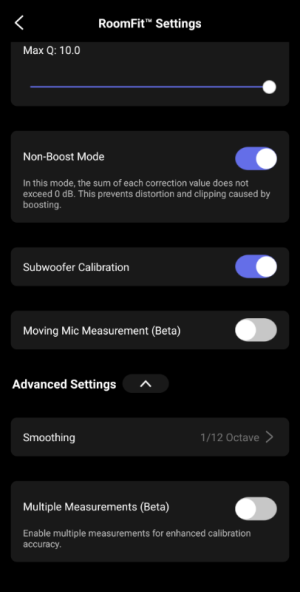
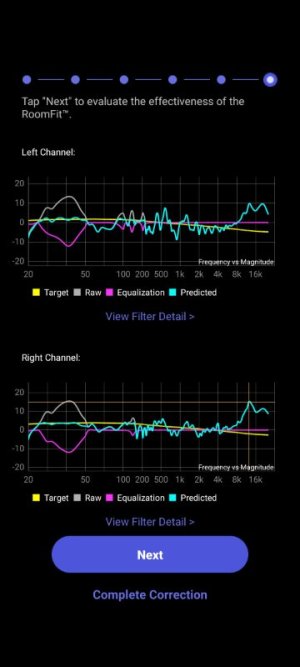
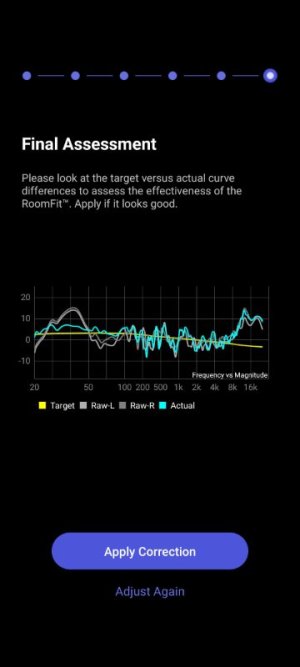
I have connected the two subs to the WiiM Ultra via a y splitter cable.
I haven't had much chance to play around with settings or positioning or anything really as yet. I made sure the settings on the two subs were the same at -20dB volume level and everything left to the Ultra to control.
I was expecting an increase in bass output on the first track I played but it wasn't there ... it may have been an unreasonable expectation with everything left unchanged on the Ultra.
With very limited listening time it did sound different ... somewhat smoother if that makes sense and less localised even though the subs are only about apart.
As a last thing to do before I finished for the night was to run a new RoomFit evaluation.
I didn't change anything from what I was running earlier ... that is crossover at 80Hz, phase 180°, Bypass Mode and Output Bass both off. I didn't have time to run a new subwoofer sync so the latency stays the same.
My room has a bass hump around 50Hz and that's still there with the room evaluation and most of the PEQ bands are still used to correct it but not a problem. Here are my results ... next is to have an extended listen when I get the chance

dominikz
Senior Contributor
- Joined
- Dec 31, 2024
- Messages
- 1,034
That's looking pretty good to me! Good job!

Lagavulin
Active Member
- Joined
- Aug 10, 2025
- Messages
- 66
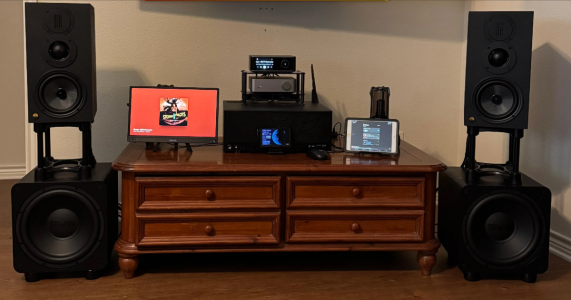
And here's the SVS 3000 Micro's paired with the Tannoy's. Amplification from the WiiM Ultra is the WiiM Vibelink.
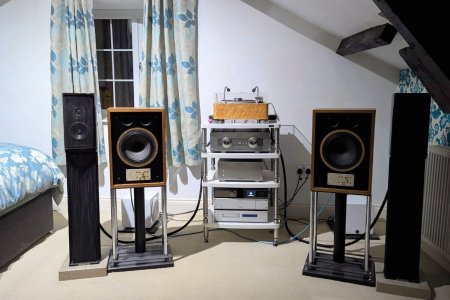
Some tracks I think that the bass is too dominant but I've got used to dialing it back with the Ultra. I think that the main improvement has been to give a "fuller" sound whatever that means. When I compare this rig to the Sonus Faber Guarneri driven by 350 watts of MF Tri-vista power the difference in depth of bass when playing the same track is very noticeable as you would expect.
Best of both worlds really as the the MF system is primarily for playing records but it still sounds superb when streaming Amazon Music hd ultra tracks via a ten year old arcam rdac (using a laptop and rwand). By the way the arcam is a great second hand buy if anyone wants to get into a cheap streaming option other than WiiM.
If I can be arsed to fiddle with changing over the subs to that system I might be tempted to see what it might sound like ...
Some tracks I think that the bass is too dominant but I've got used to dialing it back with the Ultra. I think that the main improvement has been to give a "fuller" sound whatever that means. When I compare this rig to the Sonus Faber Guarneri driven by 350 watts of MF Tri-vista power the difference in depth of bass when playing the same track is very noticeable as you would expect.
Best of both worlds really as the the MF system is primarily for playing records but it still sounds superb when streaming Amazon Music hd ultra tracks via a ten year old arcam rdac (using a laptop and rwand). By the way the arcam is a great second hand buy if anyone wants to get into a cheap streaming option other than WiiM.
If I can be arsed to fiddle with changing over the subs to that system I might be tempted to see what it might sound like ...
Stone Temple Pilots? Quality! Setup not bad eitherrunning stereo SB1000Pros and loving it with my Swan 3.1A's setup as virtual 4-way towers, Ultra + Vibelink
as you noticed its not necessarily more bass its better bass ( at least to my ears )

HoosierHiFi
Active Member
- Joined
- Jul 22, 2024
- Messages
- 117
I just saw STP two weeks ago. Not bad for no Weiland.Stone Temple Pilots? Quality! Setup not bad either
catchmeifyoucan
Active Member
- Joined
- Jun 4, 2024
- Messages
- 57
can someone explain why tha + an - gain are set to 12 ?
in various forums that ive read people dont recommend going any higher then 2/3db changes, or does that only apply to 300hz+ frequency ?
in various forums that ive read people dont recommend going any higher then 2/3db changes, or does that only apply to 300hz+ frequency ?
slartibartfast
Major Contributor
- Joined
- Apr 18, 2024
- Messages
- 6,169
If you set a lower value it might just use two filters where only one would be necessary with higher values. It is high boost gains that are frowned upon but as long there is no overall gain probably nothing to worry about.can someone explain why tha + an - gain are set to 12 ?
in various forums that ive read people dont recommend going any higher then 2/3db changes, or does that only apply to 300hz+ frequency ?

Nothing to do with the frequency range.can someone explain why tha + an - gain are set to 12 ?
in various forums that ive read people dont recommend going any higher then 2/3db changes, or does that only apply to 300hz+ frequency ?
In most cases it is recommended to run RoomFit in Non-Boost Mode, so the absolute gain is always safely <= 0 dB. In this case there's no risk in applying a 12 dB gain to individual filters.
As @slartibartfast already pointed out, being to restrictive in gain per filter can lead to the algorithm wasting a second filter at around the same frequency just to get the required gain (but effectively losing one filter that could have been put to good use otherwise).
Last edited:
dominikz
Senior Contributor
- Joined
- Dec 31, 2024
- Messages
- 1,034
As others have said, we can safely allow positive gain in RoomFit because with "Non-Boost Mode" enabled we ensure that the total gain of all filters running together never goes above the 0dB line, like in this example:can someone explain why tha + an - gain are set to 12 ?
in various forums that ive read people dont recommend going any higher then 2/3db changes, or does that only apply to 300hz+ frequency ?
I.e., even if some individual filters have some positive gain, when they are all working together the gain of the correction we be 0 or negative, so there's no danger of creating new resonances or ringing in the room.
In the example above you see the filter line is completely either at or below 0dB line, even though you can see that e.g. the PEQ filter #1 at 25Hz has a gain of +2.7dB.
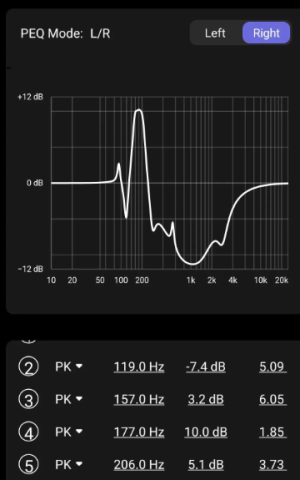
If "Non-Boost Mode" is disabled, then positive gains in the total response (i.e. response above the 0dB line) can indeed cause resonances and ringing elsewhere in the room. Here's one example of that, where you see that the line now goes over the 0dB line and creates a very strong peak at 200Hz, which will likely result in a resonance and ringing at least at some places in the room (source):
In older versions of RoomFit "Non-Boost Mode" didn't yet exist, and some other room correction tools don't have an equivalent mode - which is probably where the conflicting recommendations originally came from.
Note that high-value negative gain is not so much a problem, as we're not that sensitive to notches as we are to peaks/resonances - and we anyway need significant negative gain to counteract strong room resonances at the listening position.
catchmeifyoucan
Active Member
- Joined
- Jun 4, 2024
- Messages
- 57
aweso
awesome information, thank you so much. learning every dayAs others have said, we can safely allow positive gain in RoomFit because with "Non-Boost Mode" enabled we ensure that the total gain of all filters running together never goes above the 0dB line, like in this example:

I.e., even if some individual filters have some positive gain, when they are all working together the gain of the correction we be 0 or negative, so there's no danger of creating new resonances or ringing in the room.
In the example above you see the filter line is completely either at or below 0dB line, even though you can see that e.g. the PEQ filter #1 at 25Hz has a gain of +2.7dB.
If "Non-Boost Mode" is disabled, then positive gains in the total response (i.e. response above the 0dB line) can indeed cause resonances and ringing elsewhere in the room. Here's one example of that, where you see that the line now goes over the 0dB line and creates a very strong peak at 200Hz, which will likely result in a resonance and ringing at least at some places in the room (source):
View attachment 32432
In older versions of RoomFit "Non-Boost Mode" didn't yet exist, and some other room correction tools don't have an equivalent mode - which is probably where the conflicting recommendations originally came from.
Note that high-value negative gain is not so much a problem, as we're not that sensitive to notches as we are to peaks/resonances - and we anyway need significant negative gain to counteract strong room resonances at the listening position.
Similar threads
- Replies
- 10
- Views
- 639
- Replies
- 8
- Views
- 1K

- Replies
- 0
- Views
- 434
- Replies
- 4
- Views
- 523

