
Or, WiiM Amp Ultra II

I was about to write something half nice about Kimber Kable, along the lines of "at least a well made product" ...

... but then I found out that as of today 2 x 3m of their least expensive speaker cable, the 4PR VariStrand, configured with banana plugs on both ends would set me back no less than 390 EUR. 🤣

Thanks, but no thanks. Your cables might have become collectibles by now. ;)
The 4PR in old brown-black strands is the cable I got. I've seen it second hand in ebay for 150€ 2x2.5, but here in Spain you can get it at 22€/m bare cable without bananas, the price you quote is even higher.

Regarding the original post, if your budget allows for it, I’d personally go for the Ultra paired with a state-of-the-art Purifi or Hypex-based amp — the 1ET6562SA would be my pick. But, if you’d rather save around 1200 €, the WiiM Amp Ultra is also a very good choice, provided you’re okay with its 100 W @ 8 ohm rating. I’ve been using mine hard recently and only heard distortion right at the very top of the volume range (95–100), which is really pushing it. But this distortion could be attributed to my Dynaudio Focus 140, though they are rated to 200W@4 ohm.
 
I’ve been using mine hard recently and only heard distortion right at the very top of the volume range (95–100), which is really pushing it. But this dostortion could be attributed to my Dynaudio Focus 140, though they are rated to 200W@4 ohm.
I won't say that the speakers are the problem, indeed, but be aware that the maximum power ratings of loudspeakers are totally different from output power ratings for amplifiers.

Speaker power ratings don't relate to distortion values at all. The only requirement is that the speaker doesn't fail during the test or suffers permanent damage. The speaker is just guaranteed to "survive" 200 W (and no, contrary to common belief and what AI might try to tell us, that's usually not continuously and forever, but going through on and off cycles).
 
Last edited:
I don't say that this is the reason, indeed, but be aware that the maximum power rating of loudspeakers are totally different from output power ratings for amplifiers.

Speaker power ratings don't relate to distortion values at all. The only requirement is that the speaker doesn't fail during the test or suffers permanent damage. The speaker is just guaranteed to "survive" 200 W (and no, contrary to common believe and what AI might try to tell us, that's usually not continuously and forever, but going through on and off cycles).
The strange thing is that it was not that loud. I pushed to the limit because I was playing some Gould Bach recordings and the recording level was not very high. Otherwise I would stay at 50-60. But the distortion on the piano notes was there. I don't worry at all but for peace of mind and with no budget constraints I recommend the OP to go with the Ultra + Power Amp route. In my case I'm happy with the WAU and my if I were to change anything it would be adding a sub, probably the WiiM Sub Pro.
 
The strange thing is that it was not that loud.
Yeah, we've discussed this before, the amp ultra's gain seemingly isn't particularly high. (21db ish?? I'd have to check back through some posts.)
On some recordings 100% isn't particularly loud, and using things like pre gain, for me, degraded the sound noticably.
Other than that, the amp ultra sounds really good.
 
The strange thing is that it was not that loud. I pushed to the limit because I was playing some Gould Bach recordings and the recording level was not very high. Otherwise I would stay at 50-60. But the distortion on the piano notes was there. I don't worry at all but for peace of mind and with no budget constraints I recommend the OP to go with the Ultra + Power Amp route. In my case I'm happy with the WAU and my if I were to change anything it would be adding a sub, probably the WiiM Sub Pro.
I was having the exact same experience with the Amp Ultra. For 95% it was sufficient. But on some recordings I really had to push it and it felt like the amp was not up it. It wasn't actually distoring up there it simply didn't become any louder.

I second the choice of a dedicated Purifi based power amp with an Ultra instead of the Amp Ultra. My personal choice was a 1ET9040BA Dual Mono by Apollon. I consider this to be the best consumer amplifier available, not only related to the cost but in absolute terms.
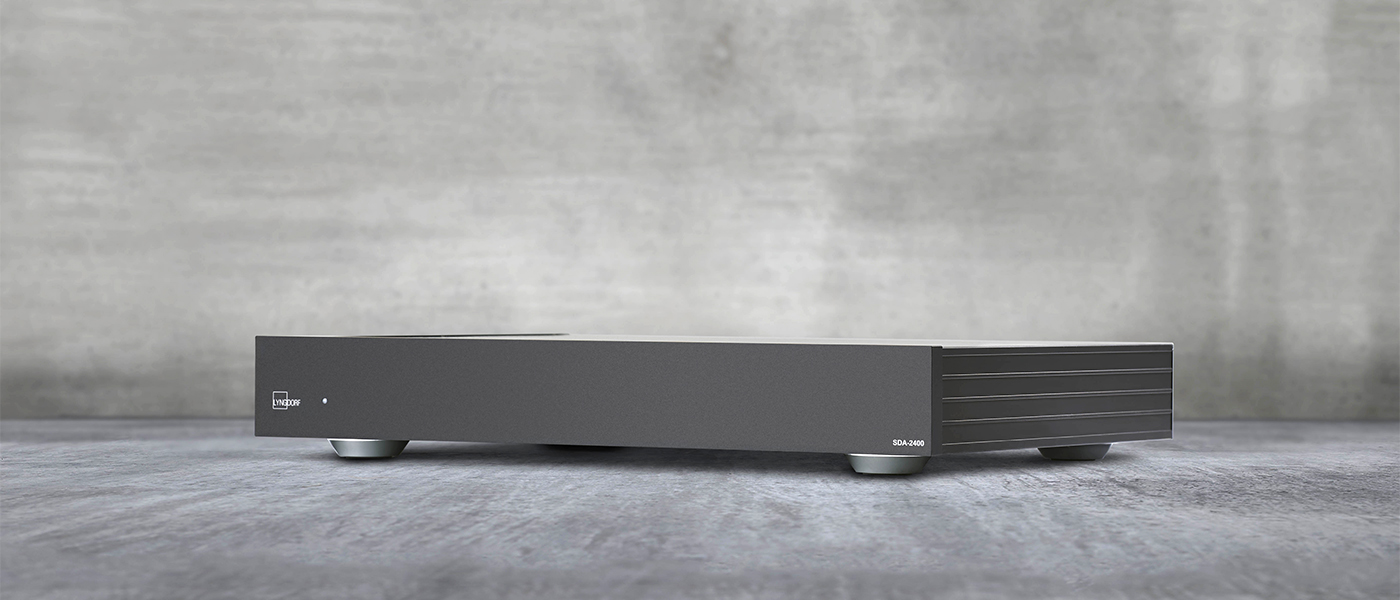
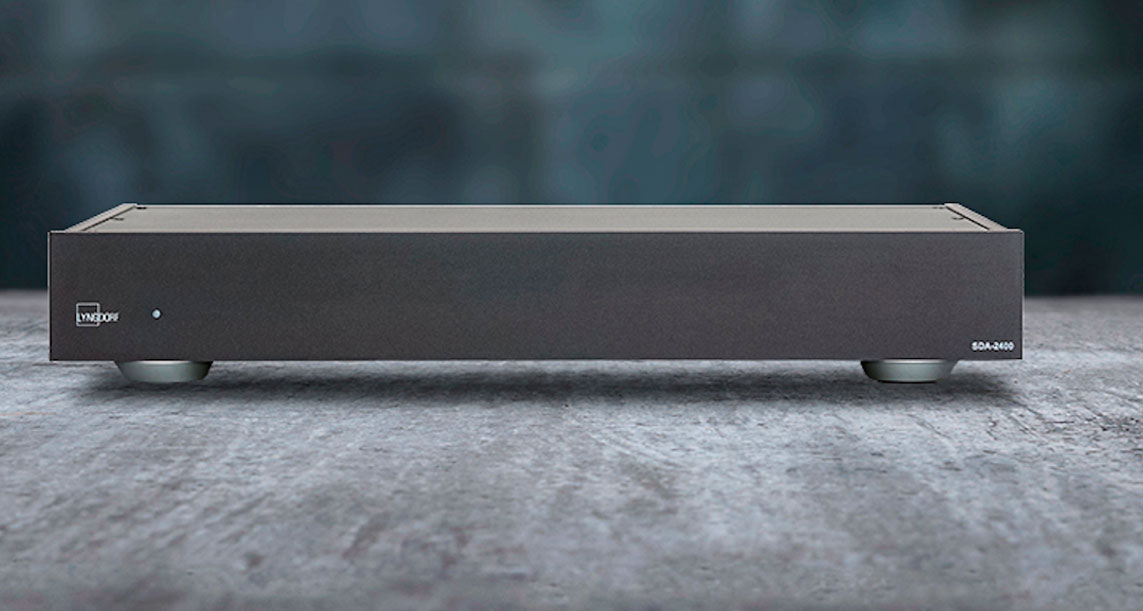
But I also love my Lyndorf SDA-2400. I believe it uses an earlier Purifi technologiy or maybe even a forerunner of it.
 
Remember, your Dynaudio produces 86 dB/W, resultung in theoretically 106 dB@100W (quite loud). Taking into consideraton crest factor of about 10 dB for Piano sound, peaks may easily cause distortion (clipping) at 96 dB already. Not a WiiM problem!
 
Remember, your Dynaudio produces 86 dB/W, resultung in theoretically 106 dB@100W (quite loud). Taking into consideraton crest factor of about 10 dB for Piano sound, peaks may easily cause distortion (clipping) at 96 dB already. Not a WiiM problem!
The WiiM can't reach clipping with digital sources because of the gain structure.
 
But I also love my Lyndorf SDA-2400. I believe it uses an earlier Purifi technologiy or maybe even a forerunner of it.
The SDA-2400 is rather the exact opposite of Purifi's technology. :). Like its Lyngdorf siblings, it's a "fully digital" class-D amp. Digital input, direct PCM to PWM conversion, no separate DAC, no global feedback.
All generations of Purifi modules are purely analogue class-D designs. High open loop gain, high feedback, digital sources must go through a DAC.

Ironically, Lyngdorf's design ultimately stems back from the TacT Millennium, developed by Lars Risbo. The same Lars Risbo sharing the CTO position with Bruno Putzeys at Purifi, which they co-founded with Peter Lyngdorf. :)
 
Last edited:
The SDA-2400 is rather the exact opposite of Purifi's technology. :). Like its Lyngdorf siblings, it's a "fully digital" class-D amp. Digital input, direct PCM to PWM conversion, no separate DAC, no global feedback.
All generations of Purifi modules are purely analogue class-D designs. High open loop gain, high feedback, digital sources must go through a DAC.

Ironically, Lyngdorf's design ultimately stems back from the TacT Millennium, developed by Lars Risbo. The same Lars Risbo sharing the CTO position with Bruno Putzeys at Purifi, which they co-founded with Peter Lyngdorf. :)
I‘m afraid you‘re wrong on this one.
The SDA is not a fully digital direct PCM to PWM amp. SDA stands for ‚semi digital amplifier‘.
It does have a DAC. The amp stage works in the analogue domain.
 

Arcam A5+ crushes WAU in music playback even with a lower specs w/ch.

Why? What happened here, TPA just cannot match A/B for low impedence speakerS?
 
I‘m afraid you‘re wrong on this one.
The SDA is not a fully digital direct PCM to PWM amp. SDA stands for ‚semi digital amplifier‘.
It does have a DAC. The amp stage works in the analogue domain.
I don't find an hint into this direction. :unsure:
 
I had to go looking for it myself. The info provided by Lyngdorf is rather modest indeed.


I also had to do some more research and in the end the pure existence of the Burr-Brown PCM5102A is the real proof in the pudding, apart from all official (Equibit, Equilog) or unofficial (semi digital amplifier) marketing slang.

By all means, I agree, the SDA-2400 is obviously not a fully digital class-D amplifier.
 

Arcam A5+ crushes WAU in music playback even with a lower specs w/ch.

Why? What happened here, TPA just cannot match A/B for low impedence speakerS?
No idea. Arcam amps always had a reputation for a warm sound which doesn't really make sense when the frequency response is measured as flat.
 
What happened here, TPA just cannot match A/B for low impedence speakerS?
No, definitely not. The WiiM Amp Ultra has no problem at all with low impedance speakers.

What happened here is John Darko feeding his crowd, in the first place. Also, a 900 € device must sound better than a 600 € device in any non-technical review.
 
I also had to do some more research and in the end the pure existence of the Burr-Brown PCM5102A is the real proof in the pudding, apart from all official (Equibit, Equilog) or unofficial (semi digital amplifier) marketing slang.

By all means, I agree, the SDA-2400 is obviously not a fully digital class-D amplifier.
With all the talk we have about amps, class A/B, D, Hypex, Purifi, TPA and ‚lastest state of the art‘, this SDA is sonically on par with all of them or even excells them, despite its design and technology being 10 year old. This includes its ‚stone age‘ DAC.
For me this goes to show that with mindful design class-D amps and DACs have reached the end of what we can hear.

I find this kind of re-ashuring and a relief. Now I can concentrate on features rather than on sound.
 
I also had to do some more research and in the end the pure existence of the Burr-Brown PCM5102A is the real proof in the pudding, apart from all official (Equibit, Equilog) or unofficial (semi digital amplifier) marketing slang.

By all means, I agree, the SDA-2400 is obviously not a fully digital class-D amplifier.

I have a TDAi-2200 and this is fully digital (although I have the analog inputs option card). I had an SDA-2200?! and it was analog input and then digital all the way to the output, thus the semi-digital ;)
 
Back
Top